Minor Front: A Bold Typeface for Maximum Impact
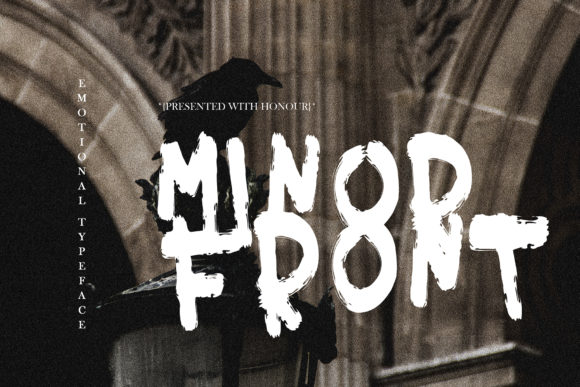
There are certain design projects that require more than just legibility; they demand a voice. You know the feeling—when a standard serif or sans serif font simply floats on the page, failing to anchor the design with the weight and authority it deserves. This is where typography stops being a passive vessel for text and becomes an active participant in the visual story. Minor Front is a bold and chunky lettered display font designed specifically for these moments. Add this powerful font to your creative ideas and notice how it makes them come alive, transforming ordinary layouts into arresting visual statements that command attention instantly.
Understanding the Power of Chunky Typography
In the world of visual communication, weight equals presence. Minor Front leverages this principle by offering a typeface that is unapologetically thick, robust, and geometric. Unlike transitional serif fonts that whisper, or delicate script fonts that suggest elegance, this modern typography option shouts with confidence. It is categorized as a premium font for a reason: the letterforms are engineered to be dense and impactful, making it an ideal choice for "hero" sections on websites, large-scale posters, and billboard advertising where visibility from a distance is non-negotiable.
The visual appeal of Minor Front lies in its ability to fill negative space effectively. When you are designing packaging for a product that needs to stand out on a crowded retail shelf, or creating social media graphics that need to stop a user mid-scroll, you need high contrast. This typeface provides that contrast immediately. It feels grounded and stable, which psychologically translates to trust and reliability for your audience. For small business owners looking to establish a solid brand identity, choosing a font with this level of visual fortitude can be a game-changer in how your company is perceived.
Strategic Applications for Branding and Marketing
For designers and entrepreneurs, the utility of a display font like Minor Front extends far beyond just making text look "cool." It is a strategic design asset. When applied to logo design, the font’s chunky nature ensures that the brand mark remains recognizable even when scaled down to the size of a favicon or a social media profile picture. Because the strokes are thick, the interior spaces (counters) of the letters remain open, preserving legibility at smaller scales better than many other heavy display fonts.
Consider the realm of editorial design and blogs. A common challenge for content creators is keeping the reader engaged through the "scan" phase. Minor Front works exceptionally well for pull quotes, subheadings, and chapter titles. By using this bold typeface to break up long blocks of text, you create visual anchors that guide the reader’s eye down the page. It acts as a visual hierarchy tool, signaling to the reader which information is most important, thereby improving the overall user experience and retention on your digital products.
Creative Freedom in Packaging and Merchandise
If you are in the business of creating physical goods, the typography on your packaging design is your silent salesperson. Minor Front is particularly effective for merchandise such as tote bags, t-shirts, and mugs. Its blocky aesthetic resonates well with streetwear brands, tech startups, and industrial-style goods. However, its versatility shouldn't be underestimated. By adjusting the tracking (the space between letters) and pairing it with a softer, handwritten font, you can soften the "tough" edge of the typeface to suit lifestyle brands or boutique invitations.
When designing for print materials, ink coverage and paper quality are always concerns. Bold fonts can sometimes suffer from "bleeding" on lower-quality paper stocks. However, the specific construction of Minor Front balances weight with clarity. It is robust enough to look striking on a glossy magazine cover, yet defined enough to maintain integrity on matte cardboard packaging. For entrepreneurs designing their own marketing assets, this font provides a professional presentation that rivals agencies, helping to level the playing field in competitive markets.
Mastering Font Pairings and Readability
One of the most common questions regarding heavy display fonts is: "What do I pair it with?" Typography is rarely about a single font; it is about the relationship between fonts. Because Minor Front is so distinct and bold, it requires a partner that plays a supporting role rather than competing for the spotlight.
A classic approach to font pairing involves contrast. You want to avoid pairing Minor Front with another decorative or heavy sans serif font, as this will create a visual collision that is hard to read. Instead, look to clean, neutral sans serif fonts or even a traditional serif font for your body copy. The simplicity of a sans serif allows the personality of Minor Front to shine in the headlines without overwhelming the reader.
Readability considerations are also vital. While Minor Front is excellent for headlines, it is not recommended for long-form body text. Display fonts are designed for impact at large sizes; using them for paragraphs of small text can cause eye strain. Always test your font pairings in context. Mock up a landing page or a brochure layout to see how the headlines interact with the body text. Does the eye flow naturally? Does the hierarchy feel intuitive? These are the practical tests that separate amateur designs from professional work.
Licensing and Commercial Usage
For those planning to use this typeface in commercial projects, understanding the license is a critical step. When you acquire a premium font, you are often paying for the right to use it in specific ways. Minor Front is a commercial font, which means you need to ensure your usage aligns with the license terms provided by the foundry.
Generally, licenses are divided into Desktop and Web usage. A desktop license typically covers you for creating logos, printed materials, and static images. A web license is required if you want to embed the font into your website’s CSS so that it renders live text for visitors. If you are a small business owner or a freelance designer creating assets for a client, it is crucial to ensure the client also possesses the appropriate license if they intend to use the font independently. Always review the included font styles—some versions of bold fonts may come with different weights or italics, which can expand your creative options.
Injecting Energy into Digital Content
In the fast-paced environment of digital marketing, energy is currency. A static, boring graphic gets ignored. Minor Front brings an inherent dynamism to any canvas. Its angular cuts and heavy presence suggest movement and urgency. This makes it a perfect candidate for call-to-action buttons, sale banners, and YouTube thumbnails.
For content creators and influencers, consistency is key to brand recognition. By standardizing on a typeface like Minor Front for your thumbnails or Instagram story overlays, you create a cohesive visual language. Your audience will begin to recognize your content before they even read the words, simply by the shape and style of the typography. This level of brand recognition is invaluable in crowded digital spaces.
Ultimately, choosing a typeface is about finding the right tool for the job. Minor Front is not a font for quiet, understated whispers. It is a tool for making bold declarations. Whether you are launching a startup, designing a poster for a community event, or creating a digital product that needs to stand out, this typeface offers the weight, clarity, and character necessary to turn heads. It bridges the gap between raw power and refined design, giving you the creative license to make your ideas not just seen, but felt. Add this powerful font to your creative toolkit and watch how it anchors your designs with undeniable strength.