The Story Behind Dancing Pam: A Script Font with Character
There's something deeply personal about a font that carries a story. Dancing Pam isn't just another script typeface dropped into a design marketplace—it's a character set that started as hand-drawn sketches over 15 years ago, born at the tail end of a high school typography phase. That kind of origin gives a font a warmth you can't manufacture, and it's exactly what makes Dancing Pam worth a closer look if you're searching for a decorative display font with genuine personality.
A Font That Feels Like It Was Made by a Real Person
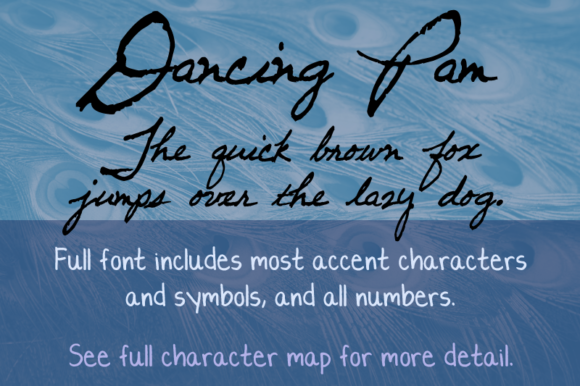
Because it was. The capital letters in Dancing Pam are large, expressive, and carry that unmistakable hand-drawn quality that digital-only fonts often struggle to replicate. When you look at the letterforms, you can sense the hand behind them—the slight imperfections, the confident curves, the personality baked into every stroke. This isn't a font that was algorithmically generated to mimic handwriting. It started as actual handwriting, and that authenticity shows.
For designers, small business owners, and content creators, this distinction matters more than you might think. Audiences today are remarkably good at sensing when something feels "off" or overly generic. A script font like Dancing Pam carries an organic quality that resonates with people because it doesn't look sterile or mass-produced. It feels crafted, and that feeling transfers to whatever project you use it in.
Where Dancing Pam Actually Works Best
Let's be direct: Dancing Pam is a display font, not a body text typeface. Its large capital letters and flowing script style make it ideal for headlines, titles, logos, and decorative text elements—but you wouldn't want to set an entire paragraph in it. That's not a limitation; it's simply how display fonts work best. Understanding this distinction early saves you from readability headaches down the road.
Here's where this typeface genuinely shines:
- Logo design — If you're building a brand for a boutique bakery, a handmade jewelry line, a photography studio, or a lifestyle blog, Dancing Pam gives your logo an immediate sense of warmth and approachability. The script style communicates creativity without feeling stuffy.
- Packaging design — Think artisan coffee bags, candle labels, skincare products, or specialty food items. A handwritten font like Dancing Pam on packaging tells customers there's a human touch behind the product.
- Social media graphics — Instagram quotes, Pinterest pins, Facebook headers, and promotional posts all benefit from a bold, eye-catching script. Dancing Pam's large capitals make it readable even at smaller sizes on mobile screens, which is where most of your audience will see it.
- Wedding and event invitations — There's a reason script fonts dominate the invitation market. Dancing Pam's elegant but not overly formal style works beautifully for save-the-dates, shower invitations, and event flyers.
- Website headers and blog graphics — Used sparingly as a hero text element or section title, this font adds visual interest to an otherwise clean layout. Pair it with a simple sans serif font for body text and you've got a balanced, professional-looking page.
- Print materials and posters — Flyers, sale announcements, menu headers, and workshop posters all benefit from a typeface that grabs attention quickly. Dancing Pam's decorative nature makes it a natural fit for materials that need to communicate personality at a glance.
- Merchandise and digital products — T-shirt designs, mug prints, tote bags, planner covers, and downloadable art prints often rely on a single impactful phrase. A script font with character like Dancing Pam turns a simple word or short quote into a visual statement.
Pairing Dancing Pam with Other Typefaces
One of the most practical skills in design is learning how to combine fonts effectively. Dancing Pam, being a script font with strong visual presence, works best when balanced with something quieter. Here are a few pairing approaches that tend to work well:
- Script plus sans serif — This is probably the most reliable combination. Use Dancing Pam for your headline or logo, then set supporting text in a clean sans serif like Montserrat, Open Sans, or Lato. The contrast between the decorative script and the functional sans serif creates visual hierarchy without competing for attention.
- Script plus serif — For projects with a more classic or editorial feel—think magazine layouts, book covers, or upscale branding—pairing Dancing Pam with a traditional serif font like Playfair Display or Georgia adds sophistication.
- Script plus monospace — This is a less conventional pairing, but it can work beautifully for tech-adjacent brands or creative portfolios that want to blend personality with precision.
The key principle is contrast. Don't pair two decorative fonts together, and don't pair two scripts together. Let Dancing Pam be the star of the show, and give it a supporting cast that knows when to step back.
Readability: The Non-Negotiable Consideration
Every designer and content creator has been tempted by a beautiful script font, only to discover that audiences can't actually read it. Dancing Pam avoids this common trap better than many script fonts, thanks to its clear capital letterforms. Still, there are a few practical guidelines worth following:
- Use it at larger sizes. Script fonts lose legibility quickly when scaled down too far. For anything your audience needs to read easily—body copy, product descriptions, legal text—switch to a serif or sans serif font.
- Limit it to short phrases. A single word, a brand name, a headline. That's where Dancing Pam is most effective.
- Check contrast against your background. Dark text on a light background (or vice versa) ensures the flowing letterforms remain distinct. Avoid placing script fonts on busy photographic backgrounds without a text overlay or shadow to help them stand out.
- Test on multiple devices. What looks gorgeous on your desktop monitor might become a jumble on a phone screen. Always preview your designs at the sizes your audience will actually encounter.
Building Brand Recognition with a Distinctive Typeface
Consistency is one of the most underrated elements of effective branding. When your audience sees the same typeface across your logo, website, social media, packaging, and printed materials, they begin to associate that visual style with your business. It becomes a recognizable element of your brand identity, almost like a visual signature.
Dancing Pam works well for this purpose because it's distinctive without being so unusual that it limits your options. A boutique brand that uses Dancing Pam for its logo and headlines, paired with a complementary sans serif for everything else, creates a cohesive visual language that feels intentional and professional. Over time, customers start to recognize that combination before they even read the words.
This kind of visual consistency doesn't require a massive budget or a design agency. It requires choosing your fonts deliberately and using them the same way across every touchpoint. A premium font with clear licensing—like Dancing Pam—gives you the legal foundation to do exactly that, whether you're designing for your own business or creating assets for clients.
A Few Final Thoughts on Choosing the Right Font
Typography choices are deceptively important. The fonts you select communicate tone, personality, and professionalism before a single word is processed consciously. A playful script font like Dancing Pam says something very different from a geometric sans serif or a traditional serif typeface—and neither is inherently better. The right choice depends entirely on your project, your audience, and the feeling you want to create.
If your work involves creative projects, handmade goods, lifestyle branding, editorial design, or any context where warmth and personality matter, a script font like Dancing Pam deserves a spot in your font library. It carries a story in its letterforms—literally, since it started as hand-drawn sketches—and that story adds depth to whatever you create with it.
Take the time to test it in context. Mock up a logo, try it on a social media template, set a headline in your next blog post. See how it feels alongside your existing brand assets. The best font choices aren't made in isolation—they're made in the real environment where your audience will actually experience them.